Introduction
Decodable books are short texts that use controlled phonics-based vocabulary aligned to a phonics sequence. They’re not predictable pattern books or leveled readers. They’re designed to help students apply phonics skills they’ve been taught, making the jump from isolated decoding practice to reading connected text. Use them alongside phonics instruction — not instead of it.
What Are Decodable Books?
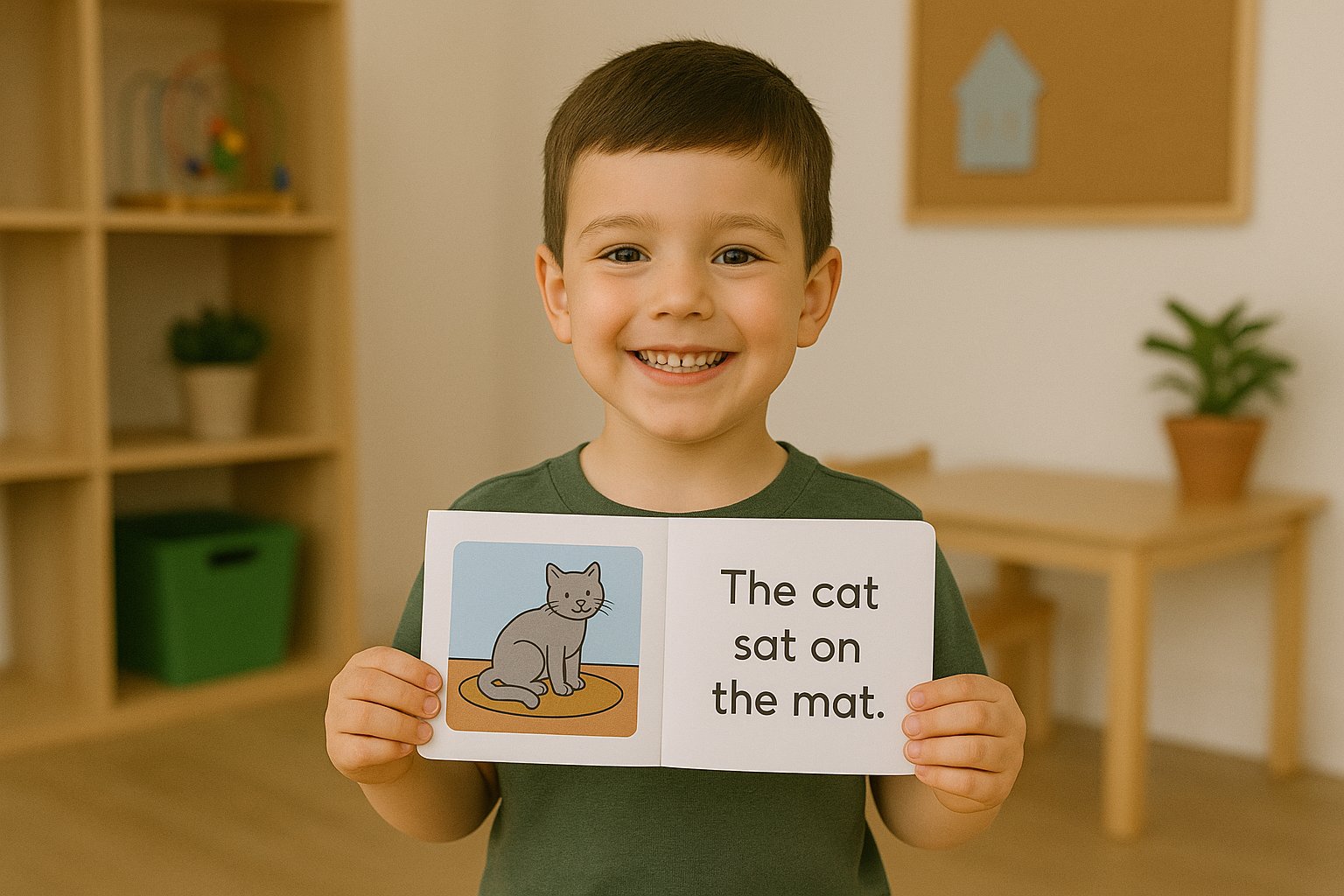
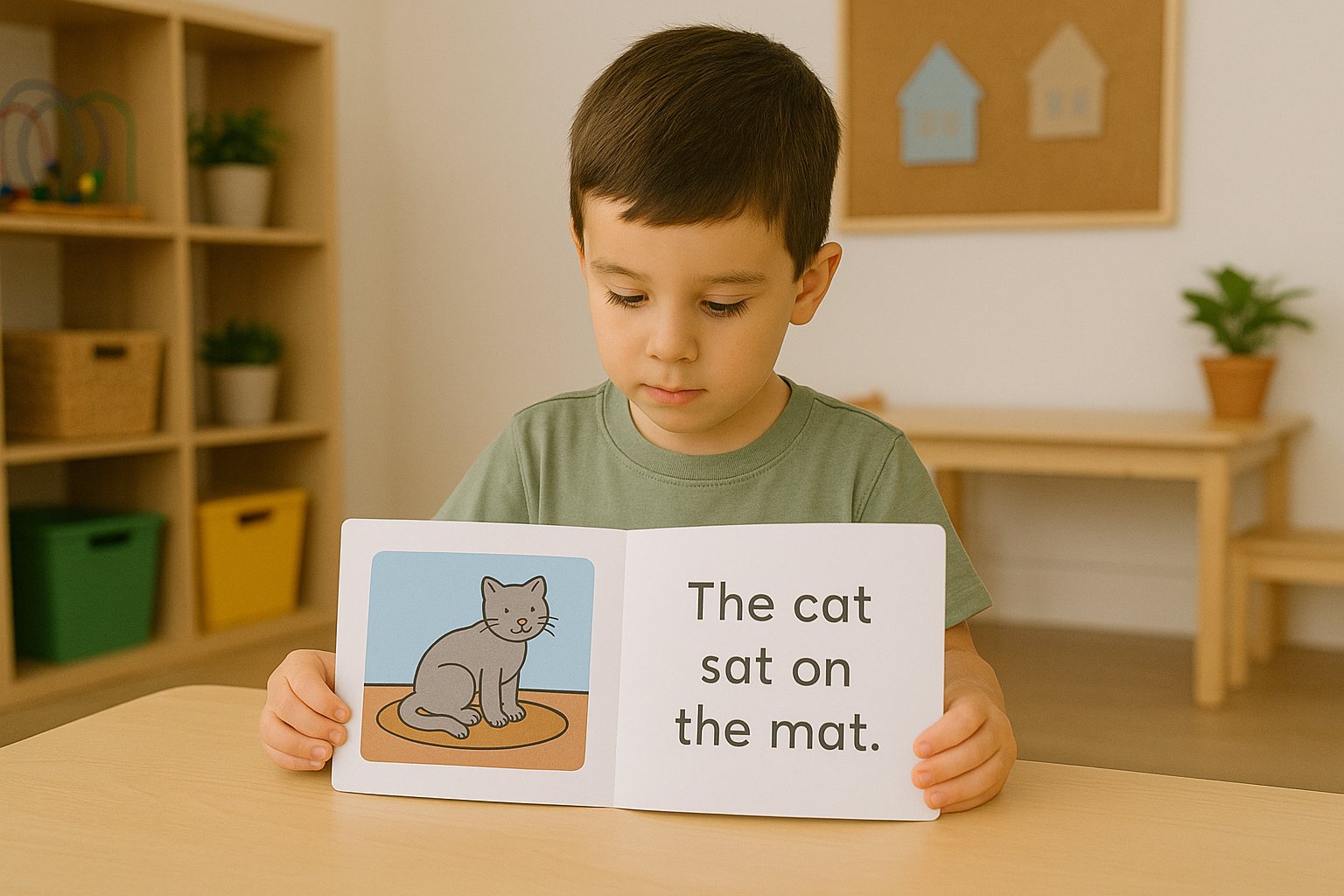
Decodable books are texts carefully written to align with a phonics scope and sequence. For example, a first set may include only short a CVC words (cat, map, Sam) plus a handful of high-frequency words. Later sets expand to digraphs, vowel teams, and multisyllabic words. The goal: give students immediate practice applying what they’ve been taught.
What Decodable Books Are NOT
- Not predictable pattern books: (“I see the dog. I see the cat.”) These rely on memorization and pictures.
- Not leveled readers: Levels are based on sentence length, vocabulary, or comprehension features, not phonics patterns.
- Not the whole reading program: They’re one part of a balanced literacy plan with phonics, vocabulary, comprehension, and fluency.
Why Decodable Books Matter
- Application bridge: Students move from drills to connected text.
- Confidence builder: Kids can actually read the words without guessing.
- Data-friendly: Easy to track errors and miscues tied to phonics patterns.
This progression — from isolated phonics drills to independent reading of connected text — is the core purpose Reading Rockets highlights when explaining why decodable books matter.
How to Use Them Effectively
- Align to your phonics scope: Only give texts that match what’s been taught.
- Pre-teach tricky words: Review irregular words before reading.
- First read = accuracy: Support decoding, prompt to “sound it out.”
- Second/third reads = fluency & comprehension: Build speed and talk about meaning.
- Track miscues: Use errors as data for reteaching specific skills.
Examples & Free Resources
Want practice-ready tools? Try these free ABZ Learning resources to pair with decodable books:
- Online Elkonin Boxes — warm-up for segmenting before reading a decodable.
- Read & Race — build fluency with decodable patterns.
- Phonics Talent Show — practice CVC and vowel teams, then apply in books.
- ➕ Create Your Own Game — build practice sets aligned with your decodable text.
FAQs
Do students only need decodable books?
No. Decodables are for practice with phonics skills. Kids also need read-alouds, complex texts, and rich discussion for vocabulary and comprehension growth.
When should I stop using decodable books?
When a student can decode multisyllabic words and apply phonics strategies to unfamiliar text with independence, transition to more complex texts.
What about struggling readers in older grades?
Decodables can still be effective — especially paired with explicit phonics intervention. Choose age-respectful texts with controlled patterns.
Conclusion
Decodable books are a bridge — not the destination. Used well, they unlock confidence and connect phonics to real reading. Align them with your phonics sequence, use them daily in short doses, and celebrate the moment kids realize: “I can read this myself.”
Explore all ABZ Learning resources or build your own custom phonics game today.