Introduction
Phonological awareness is the big umbrella — playing with sounds at the sentence, word, and syllable level (clapping syllables, rhyming, onset–rime). Phonemic awareness is the laser focus inside that umbrella — working with individual phonemes (the smallest speech sounds) through isolation, blending, segmenting, and manipulating sounds. Both are listening/speaking skills — no letters required. When you later add print, you’re teaching phonics.
What Is Phonological Awareness?
Phonological awareness is the ability to hear and play with the structure of spoken language — from whole sentences down to parts of words. Common tasks include:
- Word awareness: Count words in a sentence.
- Syllable awareness: Clap parts: ba–na–na.
- Rhyme and alliteration: cat/hat; Tim takes ten tacos.
- Onset–rime: /c/ + at makes cat.
Think of this stage as building a musical ear for language — rhythm, chunks, and patterns.
What Is Phonemic Awareness?
Phonemic awareness sits inside phonological awareness and zooms in on phonemes — the smallest units of sound in words. Core tasks:
- Isolation: What’s the first sound in map? (/m/)
- Blending: /s/–/u/–/n/ → sun
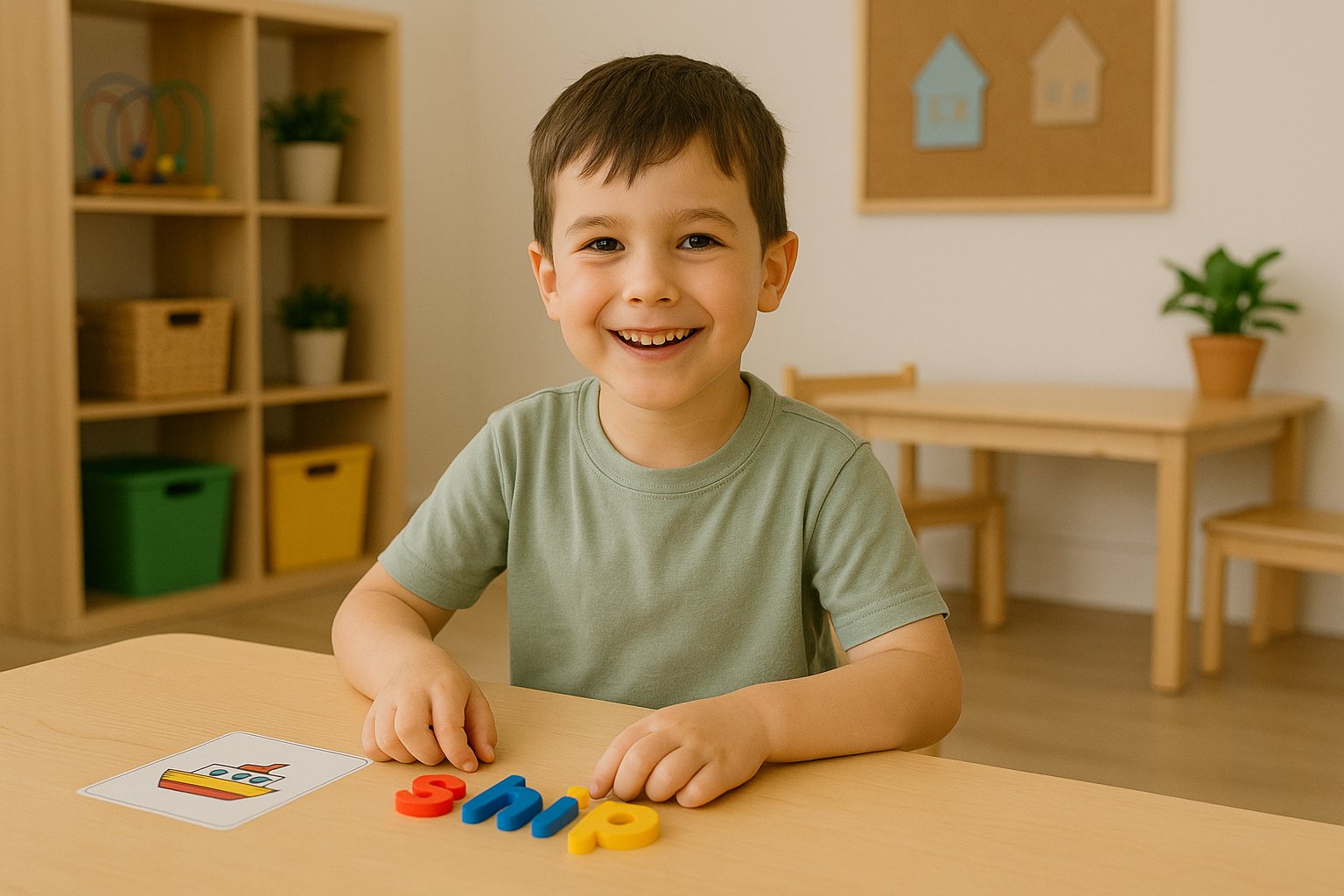
- Segmenting: ship → /sh/–/i/–/p/
- Manipulation: say cat, change /k/ to /m/ → mat
These oral skills are among the strongest predictors of early decoding and spelling growth — and they’re the bridge into phonics once print is introduced.
Key Differences at a Glance
| Feature | Phonological Awareness | Phonemic Awareness |
|---|---|---|
| Scope | Broad sound play (words, syllables, onset–rime, rhyme) | Narrow focus on individual phonemes |
| Typical Tasks | Clap syllables, match rhymes, sort by alliteration | Isolate, blend, segment, add/delete/substitute sounds |
| Print Needed? | No | No |
| When | Pre-K → Grade 1 (and as needed) | K → Grade 2 (and as needed) |
| Bridge to… | Phonemic awareness & phonics | Phonics (mapping sounds to letters) |
Why It Matters for Reading & Spelling
- Decoding: Students who can blend/segment phonemes take off faster when phonics is introduced, a link confirmed by the National Early Literacy Panel's review of early predictors of reading success.
- Encoding: Spelling grows when kids can hear each sound in order, then map it to graphemes.
- Equity: Short, targeted oral practice closes gaps for multilingual learners and strugglers.
How to Teach It: A Simple Sequence
- Rhyme & alliteration → playful listening games.
- Syllables → clap, tap, chin drops.
- Onset–rime → build word families (-at, -op).
- Phonemes → isolate → blend → segment → manipulate.
- Add print (phonics) after strong oral practice.
Coach’s take: keep doses short (5–8 minutes), high-energy, and daily. Small swings, big gains.
Free Activities & Games (By Skill)
Phoneme Segmentation & Blending (Phonemic Awareness)
- Online Elkonin Boxes — drag tokens for each sound; perfect for segmenting & mapping.
- Phonetic Blending Cards — rapid oral blending/segmenting practice for small groups.
Syllable Awareness & Word Parts (Phonological Awareness)
- Fill In The Syllable! — complete multisyllabic words; great bridge to morphology.
Onset–Rime & Word Families (Bridge Skill)
- Phonics Talent Show — CVC families support onset–rime blending (RF.K–1).
- Phonics Memory Match — match words to reinforce rimes and common patterns.
From Ear to Print (When You Introduce Letters)
- Read & Race — cumulative decoding for accuracy & rate (RF.K–2).
- Digraph Detectives — link PA to specific graphemes (sh/ch/th/wh).
Want custom sets by pattern or rime? ➕ Create your own ABZ game in minutes and assign to centers or home practice.
Assessment & Progress Monitoring
Keep it quick and oral. Track what matters: accuracy, prompt level, and transfer to print. Use the chart below to keep your data tidy.
| Skill | Efficient Probe | Benchmark Goal (K–2) | Frequency | ABZ Tool/Game |
|---|---|---|---|---|
| Rhyme | Identify/match 10 pairs | 8+/10 correct | Monthly | (Use teacher oral lists) |
| Syllables | Clap/segment 15 words | 90% accuracy | Monthly | Fill In The Syllable! |
| Phoneme Blending | Blend 10 sound strings | 8+/10 correct | Bi-weekly | Blending Cards |
| Phoneme Segmenting | Segment 10 words | 8+/10 correct | Bi-weekly | Online Elkonin Boxes |
| Phoneme Manipulation | Add/delete/sub 10 items | 7+/10 correct | Monthly | Word Chain Challenge |
Progress tip: Once a student hits benchmarks in oral PA, immediately connect to print with short, decodable practice (e.g., Read & Race).
FAQs
Is phonemic awareness the same as phonics?
No. Phonemic awareness is oral (no letters). Phonics maps those speech sounds to print (letters/spellings).
Which should I teach first?
Start with broad phonological skills (rhyme/syllables/onset–rime), then move into phonemic skills (isolate → blend → segment → manipulate). Add print as soon as oral skills are steady.
How much time per day?
5–8 minutes of high-quality PA goes a long way. Keep it brisk, playful, and cumulative.
What about older struggling readers?
Many still benefit from a short PA “tune-up,” especially blending/segmenting/manipulation tied immediately to phonics and decodables.
Conclusion
Phonological awareness tunes the ear; phonemic awareness sharpens it. Together, they unlock the code — and with the right games, kids sprint instead of slog. Start with one 5-minute routine today, then bridge to print. Use ABZ’s phonemic-awareness practice hub to match that routine with free sound-box and word-chain activities.
Explore all ABZ Learning resources or build your own custom game in minutes.